Naples Center to Positano by Ferry | Hostel Brikette
Naples Center to Positano — Ferry
Travel from central Naples to Positano entirely by sea. This route combines a short transfer from Napoli Centrale train station to the ferry port, then a scenic 70-90 minute ferry crossing directly to Positano. Best for: travelers who want to avoid the winding coastal road and enjoy sea views. Not ideal for: winter visits (limited service November-March) or anyone uncomfortable with stairs (Positano's pier requires climbing 200+ steps with luggage). Total journey time is typically 2-3 hours door-to-door, including the port transfer and any waiting time. Expect to pay €18-25 total per person. This guide covers the tram or taxi transfer to the port, buying ferry tickets from multiple operators, boarding procedures, the crossing itself, and arrival at Positano's pier with step-by-step directions to reach street level and the main village.

Journey overview
The Naples to Positano ferry route operates seasonally, with the most frequent service running April through October. During peak summer months (June-September), you'll typically find 3-6 departures per day, while shoulder season (April, May, October) usually offers 1-3 daily sailings. Winter service (November-March) is extremely limited or non-existent, depending on the year and operator.
Typical timeline: - Transfer from Napoli Centrale to port: 15-25 minutes by tram, 10-15 minutes by taxi - Arrive at port and purchase tickets: 20-30 minutes before departure (longer if pre-booking exchanges required) - Ferry crossing: 70-90 minutes depending on vessel type (hydrofoils are faster, traditional ferries slower but more spacious) - Disembark and climb stairs at Positano: 10-15 minutes - Total door-to-door: 2-3 hours
Who this route is good for: Travelers arriving at Napoli Centrale who want a scenic, direct route to Positano without dealing with crowded buses or the winding coastal road. Ideal if you enjoy being on the water and want to see the Amalfi Coast from the sea.
Who should consider alternatives: Anyone traveling in winter, those with heavy luggage or mobility limitations (the 200+ stairs at Positano pier are steep and tiring), travelers on a tight budget (the bus via Sorrento costs less), or anyone prone to seasickness (the crossing can be choppy, especially in spring and autumn).
Weather and cancellations: Ferry services are weather-dependent. Even in summer, rough seas or strong winds can lead to cancellations, usually announced the morning of departure. Always check with your ferry operator or at the port ticket office on the day of travel. If ferries are cancelled, the train-and-bus route via Sorrento is your most reliable backup.
Get to the port from Napoli Centrale
Naples has multiple ferry terminals, and Positano-bound ferries typically depart from either Molo Beverello or Calata Porta di Massa, both located at the waterfront near Piazza Municipio, about 2km west of Napoli Centrale station.
Option 1: Tram 1 (cheapest, €1.10) Exit Napoli Centrale and cross Piazza Garibaldi to find the Tram 1 stop (look for the overhead electric lines and tram tracks). Board any Tram 1 heading toward the waterfront. You'll want to get off at either: - Municipio stop (for Molo Beverello) - Marittima stop (for Calata Porta di Massa)
Ask the driver or check signage at the port to confirm which terminal your ferry company uses. The tram ride takes about 15-20 minutes. Validate your ticket in the yellow machine on board. Trams run frequently (every 8-12 minutes) from early morning until late evening.
Option 2: Taxi (faster, €10-15) Taxis queue directly outside Napoli Centrale's main exit. Tell the driver \"Molo Beverello\" or \"Porta di Massa\" depending on your ferry company. The ride takes 10-15 minutes depending on traffic. Taxis are metered, but confirm the driver starts the meter. If traveling with 3-4 people or heavy luggage, a taxi becomes cost-effective and much easier than navigating stairs and crowds on the tram.
Option 3: Alibus (if arriving from the airport) If you're coming directly from Naples Airport, the Alibus shuttle connects the airport to both Napoli Centrale and the port terminals. You can skip the city center entirely and get off at the port stop.
Navigating the port area: The waterfront terminal area can be confusing with multiple piers, ticket kiosks, and ferry companies. Look for directional signs to your specific ferry operator (e.g., Alilauro, NLG, Positano Jet). Arrive at least 30-45 minutes before your scheduled departure to locate the correct pier and purchase or exchange tickets. From our experience guiding guests, first-timers often underestimate how spread out the terminals are — budget extra time if you're unfamiliar with the port layout, especially during the busy morning rush when multiple ferries depart simultaneously.
Ferry tickets and operators
Several companies operate ferries and hydrofoils between Naples and Positano. Tickets are generally not interchangeable between operators, so check schedules and prices for each.
Main operators: - Alilauro (hydrofoils and ferries) — usually the most frequent service, hydrofoils are faster (70 mins) - NLG (Navigazione Libera del Golfo) — traditional ferries, slower (90 mins) but often cheaper and more spacious - Positano Jet — small, fast hydrofoils, limited schedule
Ticket prices: Expect to pay €18-25 per person one-way for a deck seat, depending on vessel type and season. Hydrofoils cost slightly more than traditional ferries. Prices are usually higher in July and August.
Where to buy tickets:
1. At the port on the day — Ticket kiosks and windows are located near each pier. This is the most flexible option and lets you see the current weather conditions before committing. Arrive 30-45 minutes early, especially in summer, as popular departures can sell out.
2. Online in advance — Most operators sell tickets on their websites or through third-party booking platforms. You'll usually receive a voucher by email that must be exchanged for a boarding pass at the port ticket office (add 10-15 minutes for this). Advance booking is recommended for July-August weekends.
3. Through a travel agent or hotel — Some hotels and travel agencies in Naples can book tickets for you, often with a small service fee.
What's included: A basic ticket includes passage for one adult and one small bag. Larger luggage may incur a surcharge (typically €2-5 per bag). Some ferries have indoor seating, outdoor decks, and small snack bars; hydrofoils are more cramped with assigned seating.
Checking schedules: Ferry schedules change seasonally and are often not confirmed until a few weeks before the season starts. Check operator websites directly or ask at your accommodation in Naples. The Positano to Naples ferry guide has more details on the seasonal schedule patterns. If you're planning to visit multiple coastal destinations, also see ferry guides for Capri and Salerno.
Boarding at the port
Once you have your ticket (or have exchanged your voucher for a boarding pass), head to the designated pier for your departure. Large display boards and announcements (in Italian and sometimes English) will indicate which gate and pier to use.
Boarding procedure: - Arrive at the pier at least 20-30 minutes before departure. Gates typically open 15-20 minutes prior to departure. - Queue at the gate or gangway. In peak season, expect crowds and some jostling. Keep your ticket and ID (passport for non-EU travelers) ready — some operators check IDs. - Crew members will direct you to luggage storage areas (usually at the front or rear of the vessel). Large bags and backpacks must be stored; only small personal items are allowed at your seat. - On hydrofoils, seating is usually assigned; on larger ferries, seating is often first-come, first-served. Outdoor deck space is popular on sunny days but can be windy and wet if seas are rough. - Watch your step: The gangway is a narrow ramp that moves with the swell. Crew will offer a hand if needed, but move carefully, especially with luggage.
During the crossing: - The ferry will typically make stops at Sorrento and possibly Amalfi before reaching Positano, so don't disembark too early. Listen for announcements or watch for the distinctive colorful village stacked on the hillside as you approach Positano. - The crossing can be choppy, especially in spring and autumn. If you're prone to seasickness, sit outside in fresh air, focus on the horizon, and consider medication before boarding. - Facilities on board are basic: small restrooms, a snack bar or vending machine on larger vessels. Bring water and snacks if you have specific dietary needs.
Arriving in Positano
Ferries dock at Positano's small pier, located at Spiaggia Grande (the main beach) in the lower village. This is where the real physical challenge of this route begins: you must climb 200+ steep steps to reach street level and the main part of town.
Disembarking: - Wait for the crew to secure the gangway and give the signal to disembark. Crowds can be heavy in summer. - Retrieve your luggage from the storage area as directed by crew. - Exit onto the pier and prepare for the stair climb.
The stair climb: From the ferry pier, you'll immediately see a long flight of stairs leading up from the beach. These are the only way to reach the main village on foot. The climb is about 200-250 steps depending on your destination, steep and narrow in places, with minimal shade. On a hot day with luggage, this can take 10-15 minutes and be exhausting. Pace yourself, use the handrails, and stop to rest if needed — there are a few small landings partway up.
Alternatives to climbing: - Porters: Local porters sometimes offer to carry bags up the stairs for a fee (€5-10 per bag, negotiate beforehand). Availability is not guaranteed. - Water taxi to a different landing: In some conditions, private water taxis can drop you at a different access point with fewer stairs, but this is uncommon and must be arranged in advance. - Plan your accommodation carefully: If you're staying in the upper village (Chiesa Nuova or Montepertuso), be aware it's a further uphill walk from the top of the stairs. See the Chiesa Nuova arrivals guide for directions from the main bus stop (Via Cristoforo Colombo) to accommodations in the upper village.
Once you reach street level: You'll emerge near the main coastal road (Via Cristoforo Colombo) and the bus stops. From here, you can walk to most central Positano accommodations, catch a local bus up to Chiesa Nuova or Montepertuso, or arrange a taxi if your accommodation is further uphill. The How to Get Here overview has links to guides for reaching specific areas of Positano from the main bus stop.
If ferries are cancelled
Ferries are cancelled frequently due to rough seas, high winds, or port strikes. This is especially common in autumn, winter, and early spring, but can happen even in summer. If you arrive at the port and find your ferry is cancelled:
Immediate steps: 1. Check if any other ferry companies are still operating (sometimes one operator cancels while another runs). 2. Ask at the ticket office about refunds or rebooking for later in the day. 3. Switch to the land route.
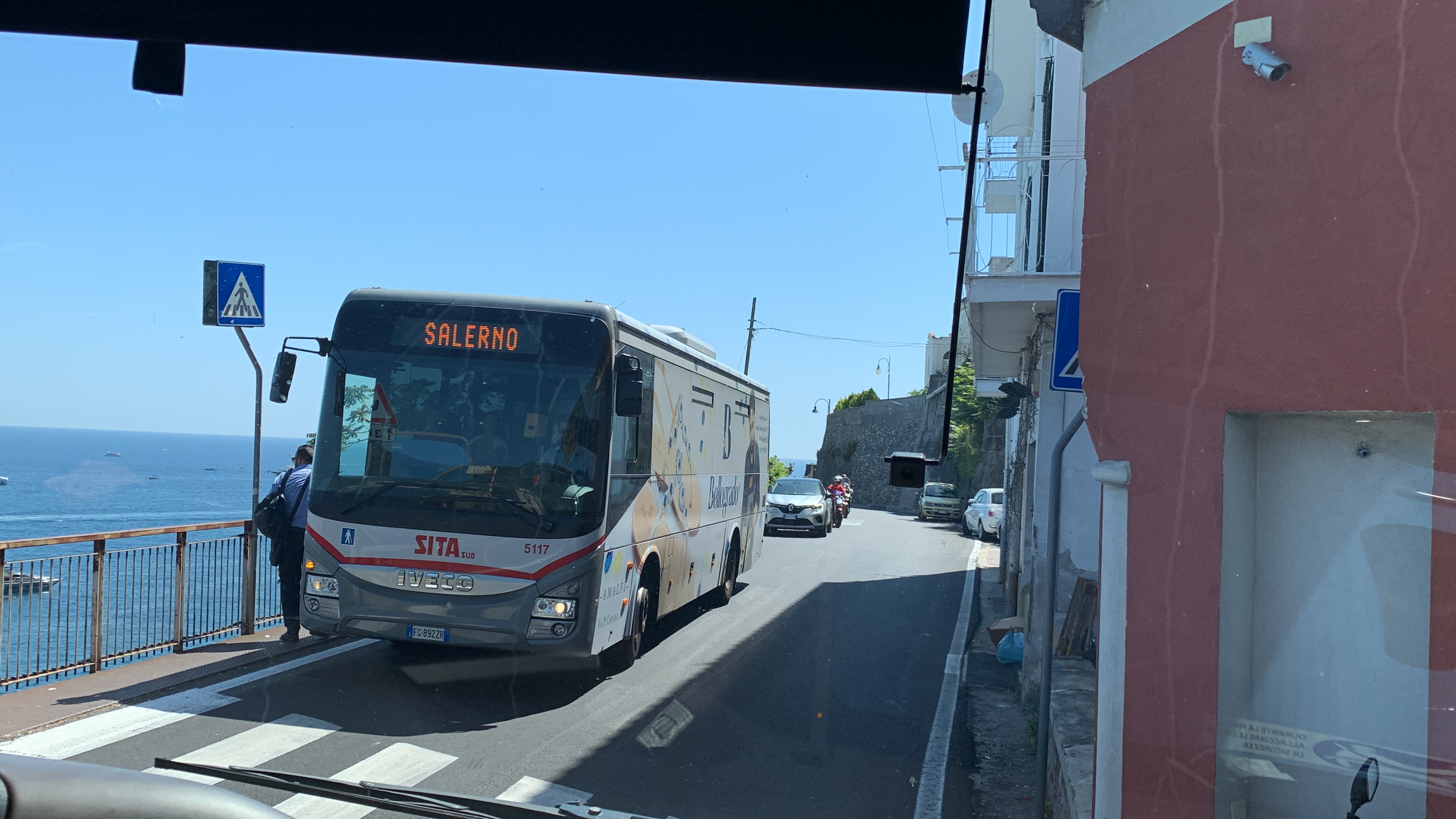
Best land alternative: Train + Bus via Sorrento The most reliable backup route is to take the Circumvesuviana train from Napoli Centrale to Sorrento, then the SITA bus from Sorrento to Positano. This route runs year-round in almost all weather conditions (though buses can be delayed by landslides or road closures in extreme weather).
Full step-by-step directions: Naples Center to Positano by train then bus.
Time and cost comparison: - Train + bus: 2.5-3 hours, €8-10 total - Ferry: 2-3 hours, €18-25 total
The land route is cheaper but less scenic and involves crowded buses. However, it's your most reliable option when the sea is rough.
FAQs
How much does the Naples to Positano ferry cost?
Tickets cost €18-25 per person one-way, depending on the operator and vessel type. Hydrofoils are faster but slightly more expensive than traditional ferries. Larger luggage may incur a €2-5 surcharge per bag.
Can I take the ferry in winter?
Ferry service between Naples and Positano is extremely limited or non-existent from November through March. Even when available, winter ferries are frequently cancelled due to rough seas. For winter travel, use the train-and-bus route via Sorrento instead.
Do I need to book ferry tickets in advance?
Advance booking is recommended for July and August, especially on weekends, as popular departures can sell out. For other months, you can usually buy tickets at the port on the day of travel. Arrive 30-45 minutes early to allow time to purchase tickets and board.
Is the Positano ferry pier accessible for wheelchairs or travelers with limited mobility?
No. The Positano ferry pier requires climbing 200+ steep, narrow steps to reach street level. There are no elevators or ramps. If you have mobility limitations or heavy luggage, the bus route via Sorrento is a more accessible option.